
What’s the one thing that geothermal heat pump industry is proud of? It’s without any doubt their ability to offer an efficient, environmentally friendly technology for meeting the energy needs of modern buildings. But the question is how the GHP industry is able to do so. For satisfying the energy needs of modern home dwellers and large firms, GHP system relies on the water pipes that are placed underground to extract natural heat from the earth surface. GHP technologies offer a wide range of environmental benefits to people. We all know buildings consume more energy than any other sector in the economy. And, to serve the growing thermal loads of buildings, geothermal heat pumps or ground surface heat pumps are constructed.
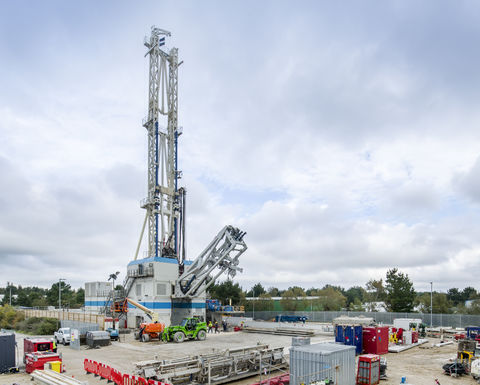
Geothermal heat pumps offer an Eco-friendly and energy efficient central heating and cooling system to meet the thermal meds of households. But, the question is how to install geothermal heat pumps. This is where SAWA Group comes in the picture. They offer cost effective and high quality solutions for meeting the growing needs of households and firms in need of geothermal heat pumps. For installing geothermal heat pump, first you have to drill geothermal boreholes under the ground. But before you start drilling the borehole, you have to make sure the ground is suitable for digging a deep-seated ditch. Also, make sure the subject area is accessible for fitting in the drilling equipment. Keep reading to know more about the process for drilling geothermal boreholes for ground source heat pumps.
What is a ground surface heat pump borehole?’
The ground surface heat pump borehole is a closed loop system that consists of a set of polyethene pipes that are placed vertically inside the ground to circulate water from the geothermal heat pump. When we talk about the size of the boreholes, it’s mostly between 15 and 122m deep. After creating the borehole, the space between the pipes and ground source heat pump borehole wall is filled with grout mix. The grout mix is the combination of bentonite, sand and potable water. While drilling the geo-thermal boreholes, you have to maintain a space of 5-6 m between the heat pump and a space of 6-7 m from the nearest building. Now taking about the depth of the borehole, it depends on the characteristics of the property like size, insulation and heating capacity. According to experts, a house that needs 10 kW heating capacity, will need 3 borehole with a depth of 80-110.
3 facts about geothermal boreholes you must know about
Now coming to the next part of the guide i.e. essential properties of geothermal borehole. Three factors Sawa Group takes into account before going for the drilling process include:
- Borehole location: The boreholes should at least be 6m apart from each other. You have to maintain this distance to avoid thermal linkage and efficiency loss.
- Energy efficiency: Borehole collectors offer 25 watts and 70 watts energy per meter of active collector.
- Fitting: The borehole loop size and overall fitting is to be taken into account before going for the drilling process.
To know more about the geothermal borehole drilling process consult Sawa Group. The company offers turnkey civil engineering, construction and support services in the sub-Saharan African region.
 Sawa Group